Ravi Teja is an Embedded Firmware Engineer who has more than 6 years of experience in hardware design and firmware development. After graduation, he joined as an Associate Software Engineer in a start-up but soon realized his love for electronics and joined a post-graduation course in Embedded System Design.
After post-graduation, he joined Multibyte Technologies, a small company that specialized in developing security systems and biometric authentication systems. There he led the hardware design team for all the attendance systems and was also responsible for writing the main application software.
Couple of years later, Ravi Teja joined Reyan Digital as Technical Consultant and started creating Basic Electronic Tutorials, which are aimed at students and young engineers. During this time, he was involved in designing and developing several DIY projects using Arduino, Raspberry Pi, 8051, ARM7, ARM Cortex-M Microcontrollers with a “learn it by making it” philosophy.
Over the years, he helped several trainee engineers with industry standards in multi-layered PCBs with EMI / EMC compatible designs, writing firmware as per MISRA standards and also with basic system design.
His technical expertise includes embedded systems (complete system design), PCB Design, RTOS Porting, Board Support Package (HAL and Device Drivers), wireless and networking.
Education
Ravi Teja graduated in Electronics and Communications Engineering from JNTU, Hyderabad and has a Post Graduate degree in VLSI and Embedded System Design from JNTU, Hyderabad.

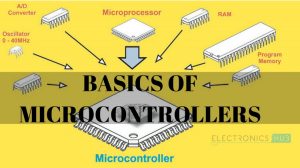
Welcome to the World of Microcontrollers, a tiny (yet very powerful) device that changed the face of Embedded Systems. In this tutorial / article, you
Inductors are said to be connected in parallel when two terminals of an inductor respectively connected to each terminal of other inductors or inductor. Similar
A hologram projector projects precise laser patterns which look like an image or video to the naked eyes. These projections are so accurate that they
Soldering is the process of joining two metals by melting a filler material (known as solder). The filler material holds the two metals together. Using
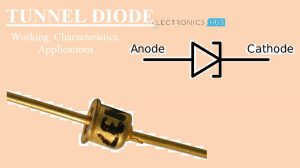
What is a Tunnel Diode? A Tunnel Diode is a heavily doped p-n junction diode. The tunnel diode shows negative resistance. When voltage value increases,
Light Emitting Diode or simply LED is one of the most commonly used sources of light now-a-days. Whether it may be your car’s headlights (or
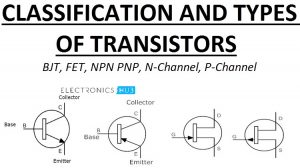
The Transistor became an essential component in modern electronics and we cannot imagine the World without Transistors. In this tutorial, we will learn about the
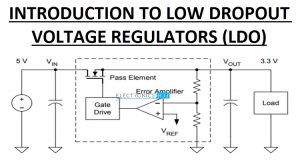
In this tutorial, we will learn about one of the important concepts for any hardware / system designer: A Low Drop Out Regulator or an
In this tutorial, we will learn about what are Wireless Sensor Networks or WSN, what are the motivations for development of Wireless Sensor Networks, different
Refresh Rate: What is Hz? Refresh rate is a measure of the capability of a monitor. It is the number of times an image is
Get great content that you love. No ads or spams, we promise.
How To Guides
Product Reviews
For Students
Copyright © 2024 Electronicshub.org