Ravi Teja is an Embedded Firmware Engineer who has more than 6 years of experience in hardware design and firmware development. After graduation, he joined as an Associate Software Engineer in a start-up but soon realized his love for electronics and joined a post-graduation course in Embedded System Design.
After post-graduation, he joined Multibyte Technologies, a small company that specialized in developing security systems and biometric authentication systems. There he led the hardware design team for all the attendance systems and was also responsible for writing the main application software.
Couple of years later, Ravi Teja joined Reyan Digital as Technical Consultant and started creating Basic Electronic Tutorials, which are aimed at students and young engineers. During this time, he was involved in designing and developing several DIY projects using Arduino, Raspberry Pi, 8051, ARM7, ARM Cortex-M Microcontrollers with a “learn it by making it” philosophy.
Over the years, he helped several trainee engineers with industry standards in multi-layered PCBs with EMI / EMC compatible designs, writing firmware as per MISRA standards and also with basic system design.
His technical expertise includes embedded systems (complete system design), PCB Design, RTOS Porting, Board Support Package (HAL and Device Drivers), wireless and networking.
Education
Ravi Teja graduated in Electronics and Communications Engineering from JNTU, Hyderabad and has a Post Graduate degree in VLSI and Embedded System Design from JNTU, Hyderabad.

It is not an easy way to measure the high voltage and currents associated with power transmission and distribution systems, hence instrument transformers are often
Sound is a phenomena that is a result of vibration of materials. Sound is characterized as a mechanical wave that carries mechanical energy. For the
For analyzing DC circuits , generally we use different methods such as ohm’s law, network theorems and other circuit simplification tools. A DC circuit analysis
In general, we represent the positive (unsigned) numbers without any sign indication and negative numbers with ‘minus’ (negative sign) sign before them. But these are
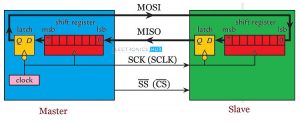
Serial Peripheral Interface or SPI is a synchronous serial communication protocol that provides full – duplex communication at very high speeds. Serial Peripheral Interface (SPI)
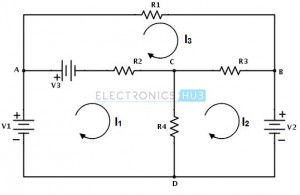
In circuit analysis, simple circuits can be analysed by using the basic analysing tools like ohms law, KVL and KCL. But for a complex circuit
The main concept behind the nodal analysis is that , in a given circuit if the node voltages are known, then we can immediately determine
A Temperature Controlled System is a type of control system that automatically controls the temperature of an object or an area. We commonly use temperature
The term ‘underwater welding’ comes as a surprise to many. This is because welding needs a flame or an arc, either from burning of a
A branch of physics deals with electric current or fields and magnetic fields and their interaction on substance or matter is called Electromagnetism. Electromagnetism has
Get great content that you love. No ads or spams, we promise.
How To Guides
Product Reviews
For Students
Copyright © 2024 Electronicshub.org