Ravi Teja is an Embedded Firmware Engineer who has more than 6 years of experience in hardware design and firmware development. After graduation, he joined as an Associate Software Engineer in a start-up but soon realized his love for electronics and joined a post-graduation course in Embedded System Design.
After post-graduation, he joined Multibyte Technologies, a small company that specialized in developing security systems and biometric authentication systems. There he led the hardware design team for all the attendance systems and was also responsible for writing the main application software.
Couple of years later, Ravi Teja joined Reyan Digital as Technical Consultant and started creating Basic Electronic Tutorials, which are aimed at students and young engineers. During this time, he was involved in designing and developing several DIY projects using Arduino, Raspberry Pi, 8051, ARM7, ARM Cortex-M Microcontrollers with a “learn it by making it” philosophy.
Over the years, he helped several trainee engineers with industry standards in multi-layered PCBs with EMI / EMC compatible designs, writing firmware as per MISRA standards and also with basic system design.
His technical expertise includes embedded systems (complete system design), PCB Design, RTOS Porting, Board Support Package (HAL and Device Drivers), wireless and networking.
Education
Ravi Teja graduated in Electronics and Communications Engineering from JNTU, Hyderabad and has a Post Graduate degree in VLSI and Embedded System Design from JNTU, Hyderabad.

In this article, we will see some of the commonly used Electrical Outlets or Receptacles in our homes and offices. We will learn about different
Demux is a one-to-many circuit, which is exactly the opposite to the Multiplexer. With the use of a Demultiplexer, data from one input can be
Graphics Cards, also known as Graphics Processing Units or GPUs are an important part of modern computers. Gamers, Content Creators, 3D Modelers, Artists, and several
Arranging or sorting your sockets based on the size may sound easy. But it is not. Especially when there are two measurement standards, SAE and
In this tutorial, we will learn about the working of a MOSFET as a Switch. In the MOSFET tutorial, we have seen the basics of
Imagine sending HD video, music, emails, phone calls, and internet all down one wire! Multiplexing is the magic trick, and multiplexers (MUX for short) are
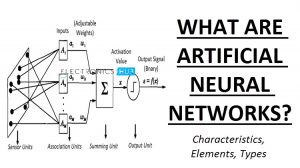
In this tutorial, we will take a look at the concept of Artificial Neural Networks (ANN), what is the need for such “neural networks”, basic
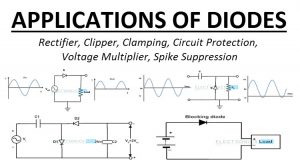
In this diodes tutorial, we will see some of the common applications of diodes. As a simplest semiconductor component, diode has a wide variety of
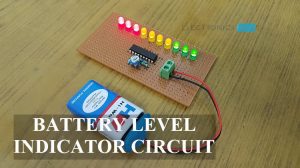
In this project, I will show you how to design a simple Battery Level Indicator Circuit using easily available components. Battery level indicator indicates the
In the entry-level gaming category, two CPUs, one from Intel and one from AMD are the main contenders for the best bang for the buck
Get great content that you love. No ads or spams, we promise.
How To Guides
Product Reviews
For Students
Copyright © 2024 Electronicshub.org