Twitter
LinkedIn
Instagram

Ravi Teja

Embedded Systems Engineer

Ravi Teja is an Embedded Firmware Engineer who has more than 6 years of experience in hardware design and firmware development. After graduation, he joined as an Associate Software Engineer in a start-up but soon realized his love for electronics and joined a post-graduation course in Embedded System Design.

After post-graduation, he joined Multibyte Technologies, a small company that specialized in developing security systems and biometric authentication systems. There he led the hardware design team for all the attendance systems and was also responsible for writing the main application software.

Couple of years later, Ravi Teja joined Reyan Digital as Technical Consultant and started creating Basic Electronic Tutorials, which are aimed at students and young engineers. During this time, he was involved in designing and developing several DIY projects using Arduino, Raspberry Pi, 8051, ARM7, ARM Cortex-M Microcontrollers with a “learn it by making it” philosophy.

Over the years, he helped several trainee engineers with industry standards in multi-layered PCBs with EMI / EMC compatible designs, writing firmware as per MISRA standards and also with basic system design.

His technical expertise includes embedded systems (complete system design), PCB Design, RTOS Porting, Board Support Package (HAL and Device Drivers), wireless and networking.

Education

Ravi Teja graduated in Electronics and Communications Engineering from JNTU, Hyderabad and has a Post Graduate degree in VLSI and Embedded System Design from JNTU, Hyderabad.

 

READ MORE FROM Ravi Teja

In this tutorial, we will learn about the Bluetooth feature of ESP32. ESP32 supports both the Classic Bluetooth v4.2 as well as the Bluetooth Low

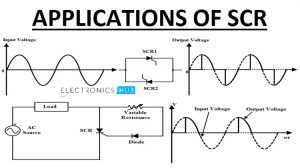
In this tutorial, we will learn about some of the commonly known SCR Applications. The SCR Applications are Switching, Power Control in both AC and

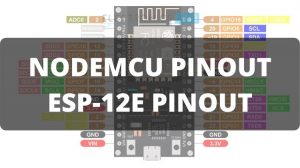
In this tutorial, we will see the Pinouts of both NodeMCU board as well as the ESP-12E Module, which is the base board for NodeMCU.

MSI Afterburner is a powerful and widely-used software utility primarily known for its GPU overclocking capabilities. However, it offers additional functionalities beyond GPU management, including

Computers have become an integral part of our daily lives. Understanding the inner workings of these machines is increasingly crucial. At the heart of every

In this tutorial, we will learn about the ADC Peripheral in ESP32. The Analog to Digital Converter or simply ADC od ESP32 is very useful

In this project, we will take a quick look at the STM32F103C8T6 Development Board, which is based on an ARM Cortex-M3 Microcontroller from STMicroelectronics. I

In the ever-expanding world of streaming, two titans stand tall: Google TV and Roku TV. Both offer a gateway to countless movies, shows, and live

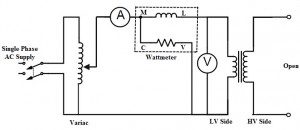
In this tutorial, we will learn what is an Open Circuit Test and Short Circuit Test in the context of Transformers, how to perform Open

PCIe (Peripheral Component Interconnect Express) is a high-speed serial expansion bus standard that is commonly used in modern computer systems. PCIe slots on a motherboard