Ravi Teja is an Embedded Firmware Engineer who has more than 6 years of experience in hardware design and firmware development. After graduation, he joined as an Associate Software Engineer in a start-up but soon realized his love for electronics and joined a post-graduation course in Embedded System Design.
After post-graduation, he joined Multibyte Technologies, a small company that specialized in developing security systems and biometric authentication systems. There he led the hardware design team for all the attendance systems and was also responsible for writing the main application software.
Couple of years later, Ravi Teja joined Reyan Digital as Technical Consultant and started creating Basic Electronic Tutorials, which are aimed at students and young engineers. During this time, he was involved in designing and developing several DIY projects using Arduino, Raspberry Pi, 8051, ARM7, ARM Cortex-M Microcontrollers with a “learn it by making it” philosophy.
Over the years, he helped several trainee engineers with industry standards in multi-layered PCBs with EMI / EMC compatible designs, writing firmware as per MISRA standards and also with basic system design.
His technical expertise includes embedded systems (complete system design), PCB Design, RTOS Porting, Board Support Package (HAL and Device Drivers), wireless and networking.
Education
Ravi Teja graduated in Electronics and Communications Engineering from JNTU, Hyderabad and has a Post Graduate degree in VLSI and Embedded System Design from JNTU, Hyderabad.

In this article, we will explore an important networking related concept called SSID. We will learn What is SSID, how to choose an SSID for
After buying a new monitor, many users are torn between HDMI and display ports. While display ports might not have achieved the popularity of HDMI
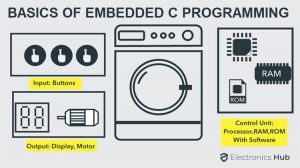
Embedded C is one of the most popular and most commonly used Programming Languages in the development of Embedded Systems. So, in this article, we
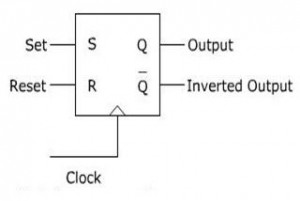
In this tutorial, we will discuss about one of the basic circuits in Digital Electronics knows as the SR Flip Flop. We will see the
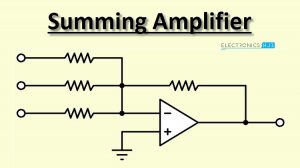
In this tutorial, we will learn about Summing Amplifier, its configurations, types of summing amplifiers (inverting and non-inverting) and a few applications of Summing Amplifier.
In this tutorial, we will learn about the Implementation of Boolean Functions using Logic Gates. In our previous tutorial, we learned about the Boolean Algebra
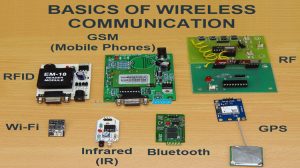
Wireless Communication is the fastest growing and most vibrant technological areas in the communication field. Wireless Communication is a method of transmitting information from one
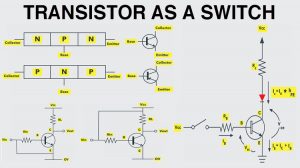
In this Transistor tutorial, we will learn about the working of a Transistor as a Switch. Switching and Amplification are the two areas of applications
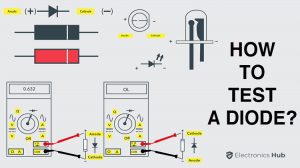
In this tutorial, we will learn how to test a diode. Diodes are one of the basic and important components in electronic circuits that are
In electronics, an Amplifier is a circuit which accepts an input signal and produces an undistorted large version of the signal as its output. In
Get great content that you love. No ads or spams, we promise.
How To Guides
Product Reviews
For Students
Copyright © 2024 Electronicshub.org