Twitter
LinkedIn
Instagram

Ravi Teja

Embedded Systems Engineer

Ravi Teja is an Embedded Firmware Engineer who has more than 6 years of experience in hardware design and firmware development. After graduation, he joined as an Associate Software Engineer in a start-up but soon realized his love for electronics and joined a post-graduation course in Embedded System Design.

After post-graduation, he joined Multibyte Technologies, a small company that specialized in developing security systems and biometric authentication systems. There he led the hardware design team for all the attendance systems and was also responsible for writing the main application software.

Couple of years later, Ravi Teja joined Reyan Digital as Technical Consultant and started creating Basic Electronic Tutorials, which are aimed at students and young engineers. During this time, he was involved in designing and developing several DIY projects using Arduino, Raspberry Pi, 8051, ARM7, ARM Cortex-M Microcontrollers with a “learn it by making it” philosophy.

Over the years, he helped several trainee engineers with industry standards in multi-layered PCBs with EMI / EMC compatible designs, writing firmware as per MISRA standards and also with basic system design.

His technical expertise includes embedded systems (complete system design), PCB Design, RTOS Porting, Board Support Package (HAL and Device Drivers), wireless and networking.

Education

Ravi Teja graduated in Electronics and Communications Engineering from JNTU, Hyderabad and has a Post Graduate degree in VLSI and Embedded System Design from JNTU, Hyderabad.

 

READ MORE FROM Ravi Teja

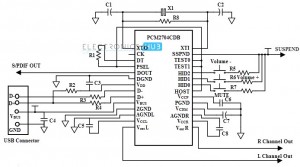
Many of us have the hobby of listening to music in leisure time. Mp3 players which are USB compatible are very useful to carry any

An inductor is a passive element which is used in electronics circuits for temporary storage of electrical energy in the form of magnetic flux or

Do you know!! computers and calculators use Flip-flop for their memory. A combination of number of flip flops will produce some amount of memory. Flip-flop,

The high and low transitions on the inputs of most of the CMOS devices should be fast edges. If the edges are not fast enough,

In the previous section, we already learned about Decimal, binary and Hexa decimal number systems. This number system is very similar to that of Hexa

For analysing the linear electric circuits that consists of two or more independent sources (Voltage or current or both), superposition theorem is extremely used (particularly

Latch is an electronic logic circuit with two stable states i.e. it is a bistable multivibrator. Latch has a feedback path to retain the information.

Communication over Radio Frequency has many advantages as it doesn’t require a line of sight connection between the transmitter and receiver as in case of

In this tutorial, we will learn some basic Digital Input and Digital Output operations on ESP8266. I chose the NodeMCU board for demonstrating ESP8266 NodeMCU

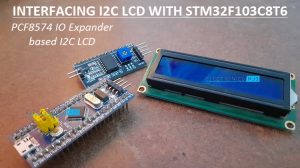
In this tutorial, I will show you how to interface an I2C LCD with STM32F103C8T6 MCU based STM32 Blue Pill Board. If you remember the