Ravi Teja is an Embedded Firmware Engineer who has more than 6 years of experience in hardware design and firmware development. After graduation, he joined as an Associate Software Engineer in a start-up but soon realized his love for electronics and joined a post-graduation course in Embedded System Design.
After post-graduation, he joined Multibyte Technologies, a small company that specialized in developing security systems and biometric authentication systems. There he led the hardware design team for all the attendance systems and was also responsible for writing the main application software.
Couple of years later, Ravi Teja joined Reyan Digital as Technical Consultant and started creating Basic Electronic Tutorials, which are aimed at students and young engineers. During this time, he was involved in designing and developing several DIY projects using Arduino, Raspberry Pi, 8051, ARM7, ARM Cortex-M Microcontrollers with a “learn it by making it” philosophy.
Over the years, he helped several trainee engineers with industry standards in multi-layered PCBs with EMI / EMC compatible designs, writing firmware as per MISRA standards and also with basic system design.
His technical expertise includes embedded systems (complete system design), PCB Design, RTOS Porting, Board Support Package (HAL and Device Drivers), wireless and networking.
Education
Ravi Teja graduated in Electronics and Communications Engineering from JNTU, Hyderabad and has a Post Graduate degree in VLSI and Embedded System Design from JNTU, Hyderabad.

When a bulk power is to be transported over very long distances, or under water, HVDC transmission system is used which is more economical compared
Whether you work on electrical circuits professionally or just want to quickly repair some electronic device right at your home, having a powerful soldering iron
Do you check the monitor screen size precisely? Most of us don’t give importance to the side of the monitor unless it does not meet
A motion detector circuit typically employs a passive infrared (PIR) sensor or an ultrasonic sensor to detect movement in its vicinity. When motion is detected,
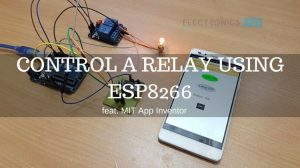
The next project in the ESP8266 WiFi Module Series is to Control a Relay using ESP8266 and Android through an App (Application) developed with the
AMDs B450 Chipset is a high-performance chipset that is aimed at power-users who want to overclock their CPUs but doesn’t require the maximum PCIe Bandwidth.
In this article, I’ll show you how to download Turbo C for Windows (or Turbo C++), install Turbo C compiler on any version of Windows
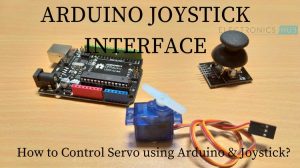
In this project, I will show you how the Arduino Joystick Interface can be implemented and use the Arduino Joystick Interface in an application where
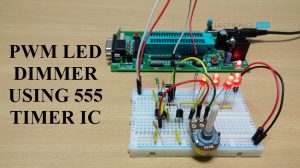
Introduction In this project, we will see a PWM based LED Dimmer using 555 Timer IC. The main principle of this circuit is to generate
People usually like to debate whether a dual monitor setup is a wise choice to make, or whether ultrawide monitors are good enough to use.
Get great content that you love. No ads or spams, we promise.
How To Guides
Product Reviews
For Students
Copyright © 2024 Electronicshub.org